
2026
HKU Shenzhen Hospital and HKUMed achieve breakthrough in treating premature ovarian insufficiency with drugs to activate dormant eggs and restore fertility
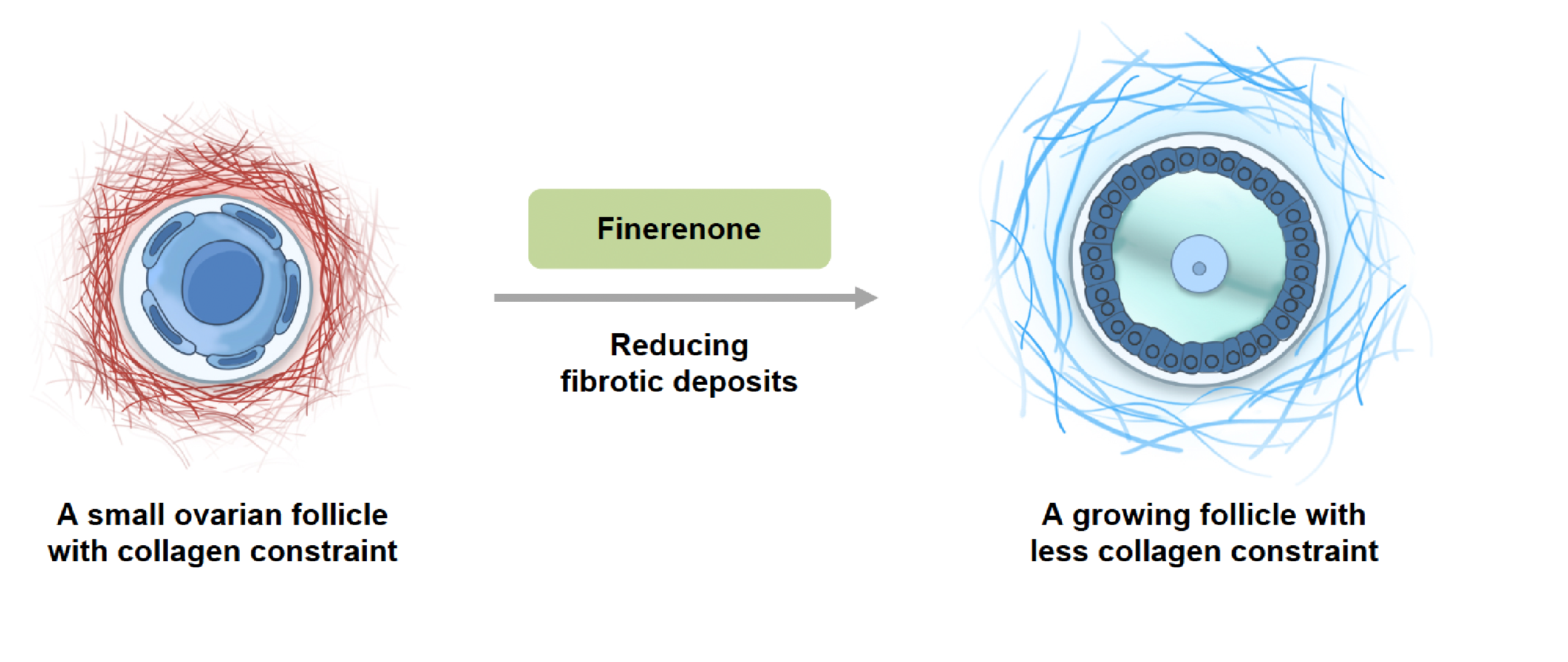
A research team from The University of Hong Kong-Shenzhen Hospital Reproductive Medicine and Prenatal Diagnosis Center/ the Department of Obstetrics and Gynaecology at the School of Clinical Medicine, LKS Faculty of Medicine, the University of Hong Kong (HKUMed), has made a major breakthrough in treating premature ovarian insufficiency (POI). The team discovered that finerenone, a drug used to treat type 2 diabetes-related chronic kidney disease, can promote the development of follicles into mature eggs and form viable embryos in patients with POI. In contrast to traditional strategies focusing solely on direct follicle stimulation, this pioneering study is the first to focus on improving the ovarian microenvironment to treat infertility caused by POI.A related clinical trial conducted at the University of Hong Kong-Shenzhen Hospital (HKU-SZH) confirmed that the participants experienced significant improvement in follicle development. About half of the participants successfully produced mature eggs, several of which developed into viable embryos. The results confirmed that this ground-breaking approach can restore fertility for women affected by POI. The research findings were published in the prestigious scientific journal Science [link to the publication].POI affects approximately 1-3% of women of childbearing age worldwide. These patients have difficulty conceiving because of lack of ovarian follicular development. Under normal circumstances, small ovarian follicles develop gradually into larger antral follicles, which respond to ovarian stimulation drugs, enabling ovulation and in vitro fertilisation (IVF) treatment. However, patients with POI often lack antral follicles that can be detected by ultrasound, rendering conventional IVF treatment almost impossible.A new strategy to improve the ovarian microenvironment to awaken dormant small folliclesThe research team adopted the ‘drug repurposing’ strategy to explore novel treatment for POI-related infertility using drugs that have been approved and backed by established clinical safety data. Professor Liu noted that this method can avoid the lengthy and costly process involved in developing new drugs from scratch and can significantly accelerate the translation of the new treatment for clinical use. Leveraging the previous in-depth research into the regulatory mechanism of ovarian follicle development, the team established a systematic screening platform and selected finerenone, a non-steroidal antifibrotic drug from a library of over a thousand drugs approved by the US Food and Drug Administration (FDA). The team found that finerenone has potential clinical value in improving the ovarian microenvironment and facilitating the development of small dormant follicles.The research team launched a clinical trial at HKU-SZH in 2024, providing pulsed oral therapy to 14 women of childbearing age diagnosed with POI. The therapy was combined with personalised ovarian stimulation regimens for up to seven months. Dr Wang Tianren, Clinical Assistant Professor from the same Department, said, ‘Preliminary results showed that eight participants successfully developed antral follicles that progressed to mature follicles. About half of the participants obtained mature eggs. Three participants developed usable embryos, and another three opted to freeze their oocytes. The treatment results were highly encouraging.’Ovarian fibrosis is a cause of follicular development arrestProfessor Liu Kui stated, ‘In the past, treatments for POI-related infertility focused mainly on directly stimulating the follicles, but the overall efficacy was limited. Our study is the first to show that improving the ovarian microenvironment, especially by addressing fibrosis, is a key breakthrough in restoring fertility.’.2026
One surgery successfully replaced both knee joints for a patient with 14 years of rheumatoid arthritis
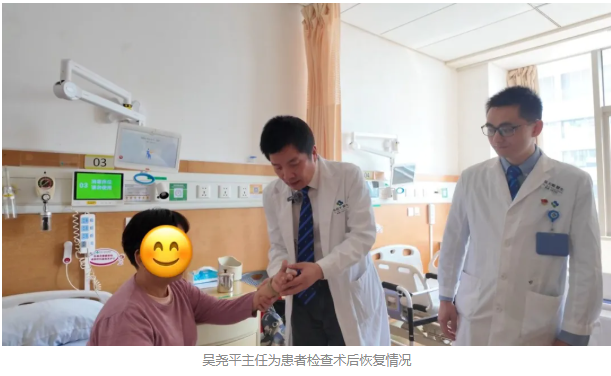
After suffering from rheumatoid arthritis for 14 years, 57-year-old Ms. Zhang (pseudonym) was plagued by severe deformity and infection in both knees, along with multiple complications. She was once bedridden and on the verge of despair. At The University of Hong Kong-Shenzhen Hospital, Dr. Wu Yaoping, Director of the Department of Orthopaedics, Sports Medicine and Joint Replacement Surgery, led a multidisciplinary team to develop a meticulous surgical plan for her. During the operation, Dr. Wu innovatively employed a self-developed flip osteotomy bone grafting technique, completing bilateral knee replacement and infection debridement in a single procedure. This approach avoided the use of traditional metal augmentation blocks, achieving better bone healing and long-term stability. Post-surgery, Ms.recovered smoothly, regained her ability to stand and walk independently, and recovered her capacity for self-care. With his exceptional surgical skill and compassion, Dr. Wu Yaoping helped the patient overcome her ordeal, reigniting hope in her life..2026
Data channel links Shenzhen, Hong Kong medical records
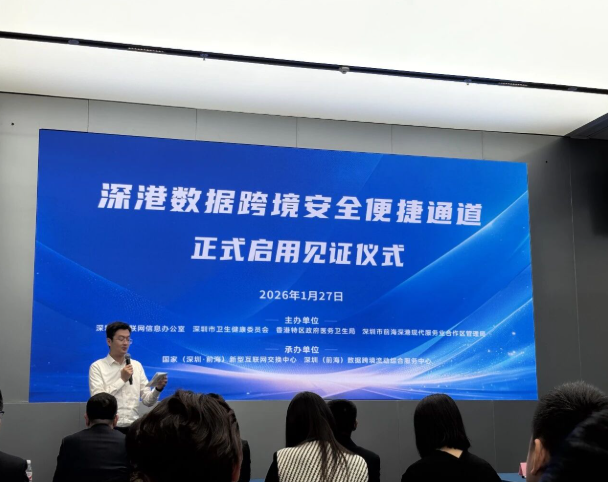
A new cross-border data channel began transmitting medical records for the public yesterday between Shenzhen and Hong Kong, aiming to streamline healthcare for hundreds of thousands of residents who travel between the two cities.A representative speaks at the launch ceremony for a new cross-border data channel connecting Shenzhen and Hong Kong, held yesterday in Qianhai. Photo courtesy of Qianhai Authority.The secure channel allows authorized patient data, including medical images and examination reports from two designated hospitals in Shenzhen, to be sent directly into Hong Kong’s “eHealth” system. The move is hailed as a major step toward integrating healthcare services within the Guangdong-Hong Kong-Macao Greater Bay Area.The service, part of a regional integration action plan, initially connects The University of Hong Kong-Shenzhen Hospital (HKU-SZU) and Shenzhen New Frontier United Family Hospital. These hospitals are already part of a Hong Kong government program that allows senior citizens to use medical vouchers across the border.Hong Kong resident Mr. Yung displays medical images and reports received from HKU-SZH on his phone via Hong Kong’s eHealth system.Photo courtesy of HKU-SZUFor patients like Hong Kong resident Mr. Yung, who was among the first to use the service yesterday, the change is tangible.“My doctor told me my medical records and test results had been automatically uploaded to my personal folder in Hong Kong’s eHealth system,” Yung said at HKU-SZU. “Next time I see a doctor in Hong Kong, they can access all the records directly. I won’t have to carry my scans around anymore.”The channel solves a practical headache for mobile patients and aims to reduce duplicate testing, potentially lowering costs and improving efficiency.A key challenge for the project was ensuring the secure and compliant flow of sensitive personal data across different jurisdictions.Huang Zekai, general manager of China (Qianhai) Internet Exchange, which built the channel, described it as a government-led, technology-driven management system.“What we have built is not just a single technical link, but a systematic technical assurance mechanism covering three stages: compliance declaration, security verification, and trusted transmission,” Huang said.The system uses a “one-stop” compliance service, a verification "security checkpoint" integrating blockchain and privacy computing technologies, and an encrypted dedicated channel for traceable data transmission, he said.Source: by Zhang Yu, Shenzhen Daily.2026
Guangdong hospitals to deposit HK residents’ radiology records into app
Starting from Jan 27, Hong Kong residents can authorize three hospitals in Guangdong province -- two in Shenzhen and one in Zhongshan -- to deposit radiology reports and images into their eHealth accounts.The three hospitals are the University of Hong Kong-Shenzhen Hospital, Shenzhen New Frontier United Family Hospital and the Zhongshan Chen Xinghai Hospital of Integrated Traditional Chinese and Western Medicine, the Health Bureau said on Tuesday.The upgrade marks an important enhancement to the “Personal Folder” function of the eHealth App, which allows patients to store their medical records in the app and obtain them during consultation outside Hong Kong.Before receiving radiology services at the designated hospitals, Hong Kong residents can submit an authorization application through the eHealth App, and then present the QR code they received in the mobile application, along with their Hong Kong identity card, to local healthcare personnel for identity verification. The healthcare institutions will then help them to directly deposit the radiology reports and images of that consultation into their personal eHealth accounts.The current arrangement allows users to self-deposit records, such as drug, allergy and adverse drug reaction, diagnosis, surgical and procedures.The upgrade supports the storage of high-resolution radiology images which are often challenging for users to upload themselves, and residents can authorize healthcare providers in the special administrative region to access them through the eHealth system during follow-up care.The upgraded function marks a significant step in cross-boundary medical record sharing and supports residents in consolidating medical records obtained from different healthcare processes into their personal eHealth accounts, offering more convenience for future management and usage, a spokesperson for the Health Bureau said.The bureau has set up support stations at the three hospitals to assist Hong Kong people in using the relevant function through eHealth app.Source: By Atlas Shao in Hong Kong,China Daily.2026
New shuttle bus eases access to medical hub
Cross-boundary medical integration between Hong Kong and Shenzhen, Guangdong province, has deepened with the launch of a direct shuttle bus route linking Futian Port and the University of Hong Kong-Shenzhen Hospital on Monday, improving access for patients visiting the regional medical hub.Amid a growing trend of Hong Kong residents traveling north for medical care, the new transportation service is expected to facilitate access to the hospital's medical services, which combine strengths from both Hong Kong and Shenzhen.The route will operate on a trial basis for three months. The fare is 2 yuan ($0.28), while seniors aged 60 and above can ride for free. Daily services run from 8 am to 6 pm, with each trip taking about 30 minutes. Buses run every half hour, and passengers can pay in cash or use transportation cards.Kenneth Cheung Man-chee, chief executive of the hospital, said the institution, as a testing ground for cross-boundary medical cooperation, is committed to lowering barriers to medical integration. He said the hospital has been promoting connectivity in medical talent, drugs and devices, payment systems, emergency medical transfers and medical information.The opening of the shuttle bus route addresses last-mile transportation challenges for patients, enhancing access to the hospital's services and further strengthening medical connectivity between Hong Kong and Shenzhen, Cheung said.A Hong Kong patient surnamed Ho was among the first to use the service. He said taxi rides between the hospital and the port typically cost 20 to 40 yuan, while taking the metro requires two transfers. The direct bus service, he said, is affordable and convenient, particularly for chronic patients who require frequent visits.Mainland resident Brian Zhong also used the service with his mother, who has osteoporosis and has visited the hospital monthly for medication since early last year.Zhong, who travels from the city of Huizhou, Guangdong, said the new route makes it easier for mainland patients to travel to Hong Kong for family visits or tourism after medical appointments, as people-to-people exchanges continue to deepen.The medication Zhong's mother uses is approved for sale in Hong Kong but not yet on the mainland. Currently, only a limited number of mainland institutions, including the University of Hong Kong-Shenzhen Hospital, offer the drug under a pilot program.As a pioneer in cross-boundary medical integration, the hospital has served as the first pilot institution for several initiatives benefiting Hong Kong patients, including the cross-boundary use of Hong Kong-approved drugs and medical devices, as well as the use of healthcare vouchers for Hong Kong elders.By the end of last year, Hong Kong elders had used healthcare vouchers at the hospital a total of 140,000 times. The program allowing cross-boundary use of Hong Kong drugs and devices has expanded to 71 medical institutions across Guangdong.Before 2011, only 5.9 percent of Hong Kong residents had used healthcare services on the mainland. That figure rose to 60 percent between 2019 and 2023.By LI BINGCUN in Shenzhen | China Daily | .2025
Inauguration of the Standardized Diagnosis and Treatment Demonstration Center for Systemic Lupus Erythematosus

On the afternoon of December 25, the plaque unveiling ceremony for the National "Standardized Diagnosis and Treatment Center – Systemic Lupus Erythematosus (SLE) Demonstration Center" was held as part of the discipline-building series of events at The University of Hong Kong-Shenzhen Hospital. The hospital’s Rheumatology and Immunology Department announced a significant achievement: it has been designated as a "Systemic Lupus Erythematosus (SLE) Standardized Diagnosis and Treatment Demonstration Center" by the National Clinical Research Center for Dermatology and Immunologic Diseases.Only 11 institutions nationwide received this accreditation, with The University of Hong Kong-Shenzhen Hospital being the first in Shenzhen and one of the very few in Guangdong Province to be selected. This honor not only signifies a new level of discipline-building and diagnostic capabilities for the hospital’s Rheumatology and Immunology Department but also marks the formal entry of Shenzhen, the Guangdong-Hong Kong-Macao Greater Bay Area, and surrounding regions into a new phase of standardized and coordinated development in the field of autoimmune disease diagnosis and treatment.The important moment was witnessed by Zeng Xiaofeng, Director of the National Clinical Research Center for Dermatology and Immunologic Diseases, Tian Xinping, Deputy Director, Xu Xiaoping, Secretary of the Party Committee of The University of Hong Kong-Shenzhen Hospital, Bai Mingzhu, Vice President, along with other relevant leaders and representatives from the discipline..2025
Top 2% Globally! 12 Experts from This Hospital Named in World's Top Scientists List
On September 19, 2025, Stanford University released the "Stanford University Top 2% Scientists List 2025".According to the list, 12 scholars and experts from The University of Hong Kong, who are employed or hold honorary appointments at The University of Hong Kong-Shenzhen Hospital, were selected for the "2025 Scientific Impact List".Website to query the Top 2% Scientists List:https://elsevier.digitalcommonsdata.com/datasets/btchxktzyw/8It is reported that the Top 2% Scientists List is a collaborative project between the Elsevier database and the team of Professor John P. A. Ioannidis from Stanford University. The list is published on the Mendeley Data website, which is under the Elsevier database.The list is based on a systematic analysis of citation data from the Scopus database. Using a composite score (C-score) that incorporates six indicators—including citations (distinguishing between self-citations and citations by others, with self-citation data provided), H-index, and HM-factor—the list selects the world's top 2% of scientists from nearly 7 million researchers based on career-long and single-year scientific impact. The selection covers 22 major scientific fields and 174 subfields, providing a measure of scientists' long-term research performance and offering a more objective and genuine reflection of their influence.Scholars selected for the Global Top 2% Scientists List demonstrate exceptional worldwide influence in their research fields and have made outstanding contributions to the advancement of their disciplines..2025
Hong Kong Patient Lee Finds Relief from Lumbar Disc Herniation Pain Excruciating "Knife-like" Pain Turning Point in Shenzhen
Mr. Lee (pseudonym), a Hong Kong patient suffering from severe pain due to lumbar disc herniation, experienced a recurrence and worsening of symptoms shortly after undergoing traditional lumbar surgery at another hospital. Recently, he regained a "pain-free life" after undergoing minimally invasive endoscopic spinal surgery at the University of Hong Kong-Shenzhen Hospital (HKU-SZH).Dr. Wu Tailin from the hospital’s Spine Surgery Division examined Mr.Lee and noted a 5 cm surgical scar on his lower back. In January 2025, Mr.Lee had been diagnosed with lumbar disc herniation at another hospital due to intense lower back pain and "knife-like" pain radiating down his left leg, severely limiting his mobility. He underwent traditional open lumbar surgery, but the pain only temporarily eased before recurring and intensifying.Lee tried various conservative treatments, but the pain persisted. "My friends saw my condition and suggested I seek treatment in Shenzhen. I had wanted to come earlier, but the pain was so severe I couldn’t even walk," Lee said. In late June, he visited HKU-SZH’s Spine Surgery Division for consultation.After a thorough examination and imaging review, Dr. Wu confirmed the diagnosis of L4/5 disc herniation and recommended endoscopic discectomy. The case was then discussed with Dr. Fan Degang, Associate Consultant of Spine Surgery, offering Lee new hope.Lateral Approach Avoids Adhesion RisksAwake Surgery with Local AnesthesiaDr. Fan, with over 30 years of experience in orthopedics, specializes in treating spinal conditions. He noted, "The patient’s previous surgery caused severe nerve adhesions, significantly increasing the difficulty and risk of nerve damage in this procedure." To address this, the team opted for a lateral approach, making a 1 cm incision to bypass the adhesion-affected area. Dr. Fan Degang (right) and Dr. Wu Tailin (center) during the surgical procedureIn early July, Lee underwent successful endoscopic discectomy under local anesthesia, remaining awake throughout the two-hour procedure."It was a unique experience. At first, I was nervous, but hearing the doctors’ professional dialogue reassured me," Lee recalled.No drainage tube was needed post-surgery, and Lee was able to walk with assistance. After standardized rehabilitation care, he was discharged the next day with almost no residual pain.Prioritizing Spinal HealthAdopting Healthy HabitsLumbar disc herniation, a common spinal condition, occurs when the intervertebral disc’s nucleus pulposus protrudes due to degenerative changes or external forces, compressing nerve roots and causing pain or numbness in the lower limbs.Dr. Fan emphasized that treatment depends on symptom severity. Mild cases may improve with rest, physical therapy, or traction, while severe cases require medication or surgery. He advised maintaining good posture and exercise habits to delay or prevent the onset of lumbar disc herniation.Dr. Fan Degang conducted physical examination on Mr. Lee"Patient-first" is the philosophy of HKU-SZH. The hospital’s Orthopedics Department, a national key clinical specialty, brings together experts to provide high-quality medical and humanistic services, enhancing health outcomes for Greater Bay Area residents..