



Data channel links Shenzhen, Hong Kong medical records
A new cross-border data channel began transmitting medical records for the public yesterday between Shenzhen and Hong Kong, aiming to streamline healthcare for hundreds of thousands of residents who travel between the two cities.
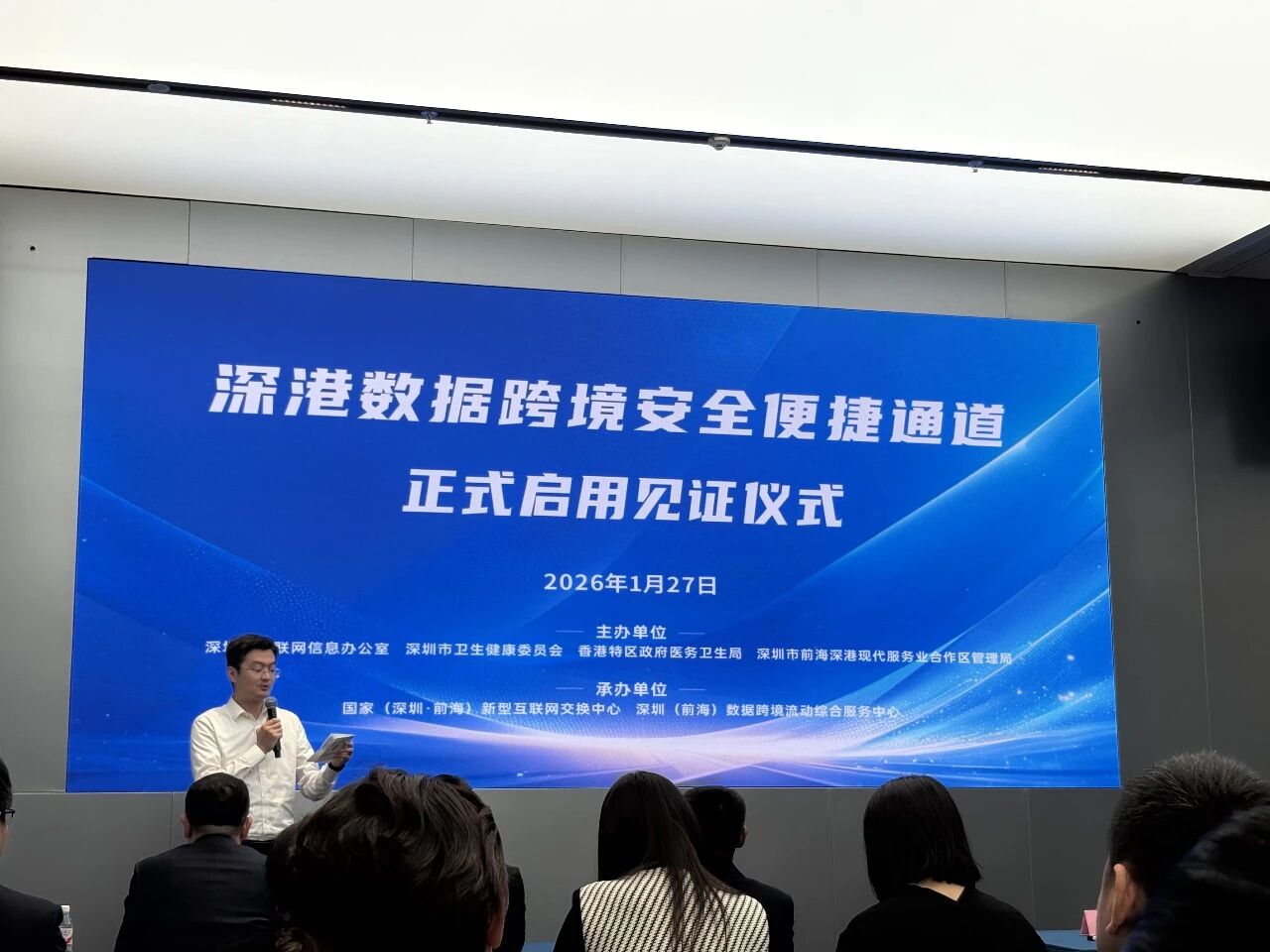
A representative speaks at the launch ceremony for a new cross-border data channel connecting Shenzhen and Hong Kong, held yesterday in Qianhai. Photo courtesy of Qianhai Authority.
The secure channel allows authorized patient data, including medical images and examination reports from two designated hospitals in Shenzhen, to be sent directly into Hong Kong’s “eHealth” system. The move is hailed as a major step toward integrating healthcare services within the Guangdong-Hong Kong-Macao Greater Bay Area.
The service, part of a regional integration action plan, initially connects The University of Hong Kong-Shenzhen Hospital (HKU-SZU) and Shenzhen New Frontier United Family Hospital. These hospitals are already part of a Hong Kong government program that allows senior citizens to use medical vouchers across the border.
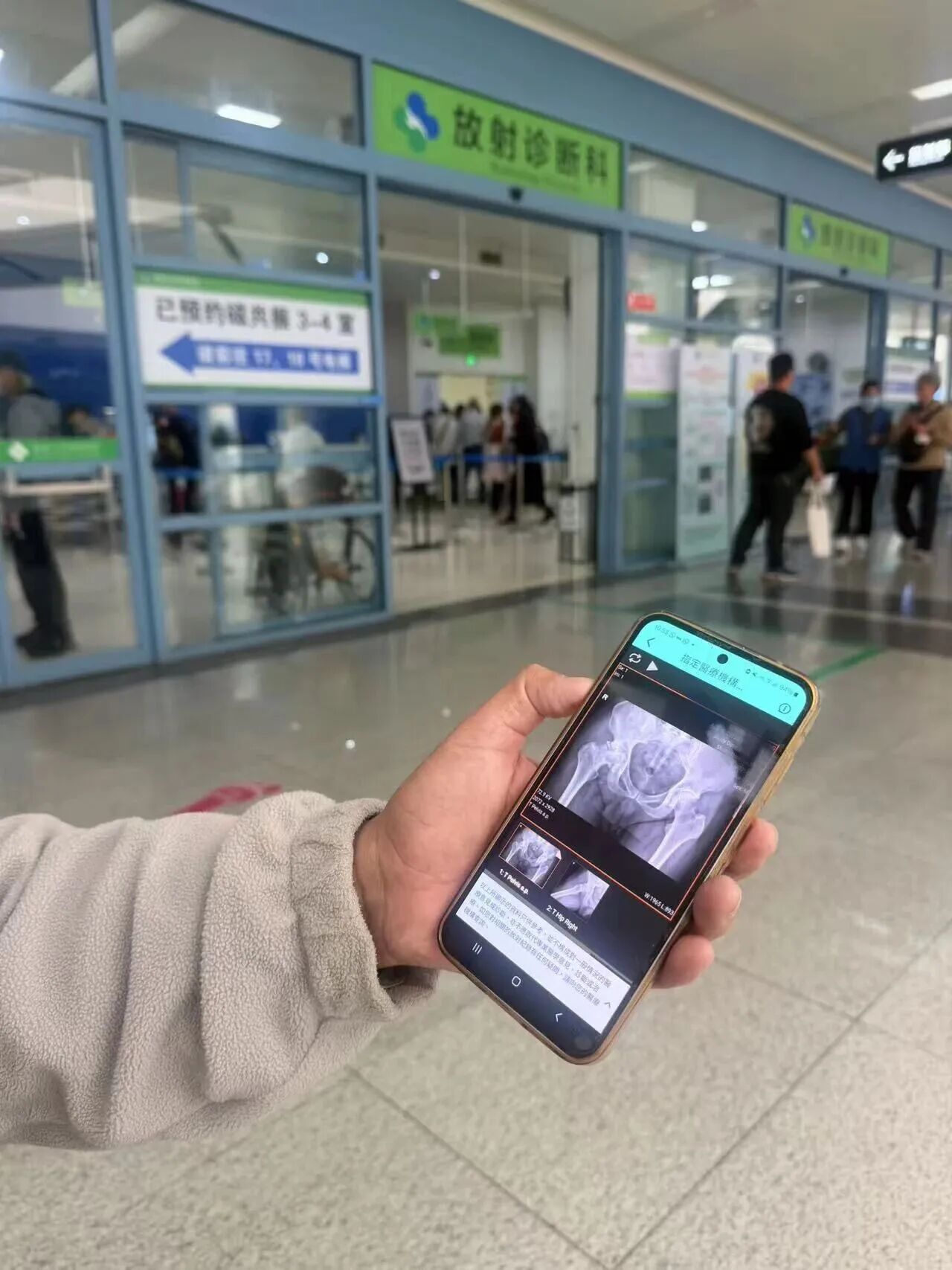
Hong Kong resident Mr. Yung displays medical images and reports received from HKU-SZH on his phone via Hong Kong’s eHealth system.Photo courtesy of HKU-SZU
For patients like Hong Kong resident Mr. Yung, who was among the first to use the service yesterday, the change is tangible.
“My doctor told me my medical records and test results had been automatically uploaded to my personal folder in Hong Kong’s eHealth system,” Yung said at HKU-SZU. “Next time I see a doctor in Hong Kong, they can access all the records directly. I won’t have to carry my scans around anymore.”
The channel solves a practical headache for mobile patients and aims to reduce duplicate testing, potentially lowering costs and improving efficiency.
A key challenge for the project was ensuring the secure and compliant flow of sensitive personal data across different jurisdictions.
Huang Zekai, general manager of China (Qianhai) Internet Exchange, which built the channel, described it as a government-led, technology-driven management system.
“What we have built is not just a single technical link, but a systematic technical assurance mechanism covering three stages: compliance declaration, security verification, and trusted transmission,” Huang said.
The system uses a “one-stop” compliance service, a verification "security checkpoint" integrating blockchain and privacy computing technologies, and an encrypted dedicated channel for traceable data transmission, he said.
Source: by Zhang Yu, Shenzhen Daily

WeChat official account
Smart Hospital
 Search



 粤公网安备44030002006353号