

2026
New shuttle bus eases access to medical hub
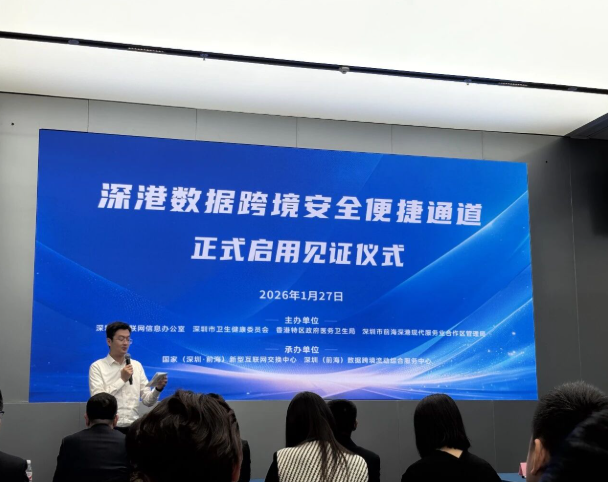
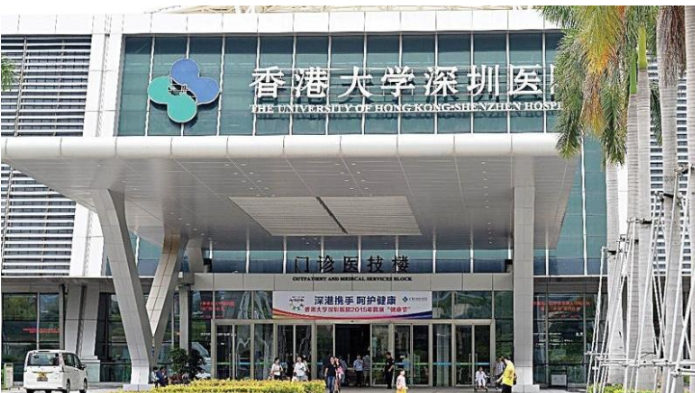
Cross-boundary medical integration between Hong Kong and Shenzhen, Guangdong province, has deepened with the launch of a direct shuttle bus route linking Futian Port and the University of Hong Kong-Shenzhen Hospital on Monday, improving access for patients visiting the regional medical hub.Amid a growing trend of Hong Kong residents traveling north for medical care, the new transportation service is expected to facilitate access to the hospital's medical services, which combine strengths from both Hong Kong and Shenzhen.The route will operate on a trial basis for three months. The fare is 2 yuan ($0.28), while seniors aged 60 and above can ride for free. Daily services run from 8 am to 6 pm, with each trip taking about 30 minutes. Buses run every half hour, and passengers can pay in cash or use transportation cards.Kenneth Cheung Man-chee, chief executive of the hospital, said the institution, as a testing ground for cross-boundary medical cooperation, is committed to lowering barriers to medical integration. He said the hospital has been promoting connectivity in medical talent, drugs and devices, payment systems, emergency medical transfers and medical information.The opening of the shuttle bus route addresses last-mile transportation challenges for patients, enhancing access to the hospital's services and further strengthening medical connectivity between Hong Kong and Shenzhen, Cheung said.A Hong Kong patient surnamed Ho was among the first to use the service. He said taxi rides between the hospital and the port typically cost 20 to 40 yuan, while taking the metro requires two transfers. The direct bus service, he said, is affordable and convenient, particularly for chronic patients who require frequent visits.Mainland resident Brian Zhong also used the service with his mother, who has osteoporosis and has visited the hospital monthly for medication since early last year.Zhong, who travels from the city of Huizhou, Guangdong, said the new route makes it easier for mainland patients to travel to Hong Kong for family visits or tourism after medical appointments, as people-to-people exchanges continue to deepen.The medication Zhong's mother uses is approved for sale in Hong Kong but not yet on the mainland. Currently, only a limited number of mainland institutions, including the University of Hong Kong-Shenzhen Hospital, offer the drug under a pilot program.As a pioneer in cross-boundary medical integration, the hospital has served as the first pilot institution for several initiatives benefiting Hong Kong patients, including the cross-boundary use of Hong Kong-approved drugs and medical devices, as well as the use of healthcare vouchers for Hong Kong elders.By the end of last year, Hong Kong elders had used healthcare vouchers at the hospital a total of 140,000 times. The program allowing cross-boundary use of Hong Kong drugs and devices has expanded to 71 medical institutions across Guangdong.Before 2011, only 5.9 percent of Hong Kong residents had used healthcare services on the mainland. That figure rose to 60 percent between 2019 and 2023.By LI BINGCUN in Shenzhen | China Daily | .2025
Inauguration of the Standardized Diagnosis and Treatment Demonstration Center for Systemic Lupus Erythematosus

On the afternoon of December 25, the plaque unveiling ceremony for the National "Standardized Diagnosis and Treatment Center – Systemic Lupus Erythematosus (SLE) Demonstration Center" was held as part of the discipline-building series of events at The University of Hong Kong-Shenzhen Hospital. The hospital’s Rheumatology and Immunology Department announced a significant achievement: it has been designated as a "Systemic Lupus Erythematosus (SLE) Standardized Diagnosis and Treatment Demonstration Center" by the National Clinical Research Center for Dermatology and Immunologic Diseases.Only 11 institutions nationwide received this accreditation, with The University of Hong Kong-Shenzhen Hospital being the first in Shenzhen and one of the very few in Guangdong Province to be selected. This honor not only signifies a new level of discipline-building and diagnostic capabilities for the hospital’s Rheumatology and Immunology Department but also marks the formal entry of Shenzhen, the Guangdong-Hong Kong-Macao Greater Bay Area, and surrounding regions into a new phase of standardized and coordinated development in the field of autoimmune disease diagnosis and treatment.The important moment was witnessed by Zeng Xiaofeng, Director of the National Clinical Research Center for Dermatology and Immunologic Diseases, Tian Xinping, Deputy Director, Xu Xiaoping, Secretary of the Party Committee of The University of Hong Kong-Shenzhen Hospital, Bai Mingzhu, Vice President, along with other relevant leaders and representatives from the discipline..2025
Top 2% Globally! 12 Experts from This Hospital Named in World's Top Scientists List
On September 19, 2025, Stanford University released the "Stanford University Top 2% Scientists List 2025".According to the list, 12 scholars and experts from The University of Hong Kong, who are employed or hold honorary appointments at The University of Hong Kong-Shenzhen Hospital, were selected for the "2025 Scientific Impact List".Website to query the Top 2% Scientists List:https://elsevier.digitalcommonsdata.com/datasets/btchxktzyw/8It is reported that the Top 2% Scientists List is a collaborative project between the Elsevier database and the team of Professor John P. A. Ioannidis from Stanford University. The list is published on the Mendeley Data website, which is under the Elsevier database.The list is based on a systematic analysis of citation data from the Scopus database. Using a composite score (C-score) that incorporates six indicators—including citations (distinguishing between self-citations and citations by others, with self-citation data provided), H-index, and HM-factor—the list selects the world's top 2% of scientists from nearly 7 million researchers based on career-long and single-year scientific impact. The selection covers 22 major scientific fields and 174 subfields, providing a measure of scientists' long-term research performance and offering a more objective and genuine reflection of their influence.Scholars selected for the Global Top 2% Scientists List demonstrate exceptional worldwide influence in their research fields and have made outstanding contributions to the advancement of their disciplines..2025
Hong Kong Patient Lee Finds Relief from Lumbar Disc Herniation Pain Excruciating "Knife-like" Pain Turning Point in Shenzhen
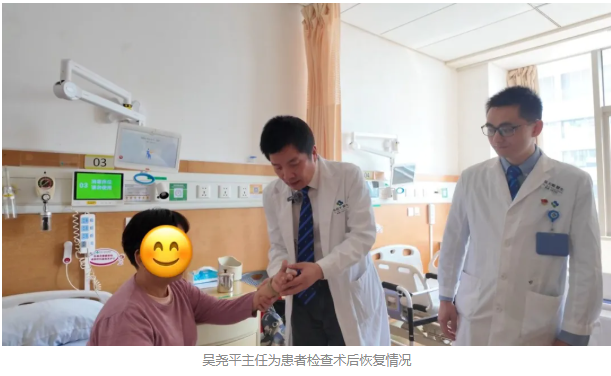
Mr. Lee (pseudonym), a Hong Kong patient suffering from severe pain due to lumbar disc herniation, experienced a recurrence and worsening of symptoms shortly after undergoing traditional lumbar surgery at another hospital. Recently, he regained a "pain-free life" after undergoing minimally invasive endoscopic spinal surgery at the University of Hong Kong-Shenzhen Hospital (HKU-SZH).Dr. Wu Tailin from the hospital’s Spine Surgery Division examined Mr.Lee and noted a 5 cm surgical scar on his lower back. In January 2025, Mr.Lee had been diagnosed with lumbar disc herniation at another hospital due to intense lower back pain and "knife-like" pain radiating down his left leg, severely limiting his mobility. He underwent traditional open lumbar surgery, but the pain only temporarily eased before recurring and intensifying.Lee tried various conservative treatments, but the pain persisted. "My friends saw my condition and suggested I seek treatment in Shenzhen. I had wanted to come earlier, but the pain was so severe I couldn’t even walk," Lee said. In late June, he visited HKU-SZH’s Spine Surgery Division for consultation.After a thorough examination and imaging review, Dr. Wu confirmed the diagnosis of L4/5 disc herniation and recommended endoscopic discectomy. The case was then discussed with Dr. Fan Degang, Associate Consultant of Spine Surgery, offering Lee new hope.Lateral Approach Avoids Adhesion RisksAwake Surgery with Local AnesthesiaDr. Fan, with over 30 years of experience in orthopedics, specializes in treating spinal conditions. He noted, "The patient’s previous surgery caused severe nerve adhesions, significantly increasing the difficulty and risk of nerve damage in this procedure." To address this, the team opted for a lateral approach, making a 1 cm incision to bypass the adhesion-affected area. Dr. Fan Degang (right) and Dr. Wu Tailin (center) during the surgical procedureIn early July, Lee underwent successful endoscopic discectomy under local anesthesia, remaining awake throughout the two-hour procedure."It was a unique experience. At first, I was nervous, but hearing the doctors’ professional dialogue reassured me," Lee recalled.No drainage tube was needed post-surgery, and Lee was able to walk with assistance. After standardized rehabilitation care, he was discharged the next day with almost no residual pain.Prioritizing Spinal HealthAdopting Healthy HabitsLumbar disc herniation, a common spinal condition, occurs when the intervertebral disc’s nucleus pulposus protrudes due to degenerative changes or external forces, compressing nerve roots and causing pain or numbness in the lower limbs.Dr. Fan emphasized that treatment depends on symptom severity. Mild cases may improve with rest, physical therapy, or traction, while severe cases require medication or surgery. He advised maintaining good posture and exercise habits to delay or prevent the onset of lumbar disc herniation.Dr. Fan Degang conducted physical examination on Mr. Lee"Patient-first" is the philosophy of HKU-SZH. The hospital’s Orthopedics Department, a national key clinical specialty, brings together experts to provide high-quality medical and humanistic services, enhancing health outcomes for Greater Bay Area residents..2025
Government to extend Pilot Scheme for Supporting Patients of Hospital Authority in Guangdong-Hong Kong-Macao Greater Bay Area
The Health Bureau announced on (March 31) the extension of the Pilot Scheme for Supporting Patients of the Hospital Authority in the Guangdong-Hong Kong-Macao Greater Bay Area (Pilot Scheme) for one year till March 31 next year, with a view to enabling eligible patients of the Hospital Authority (HA) to choose to receive subsidised consultation services at the designated collaborating healthcare institution in the Guangdong-Hong Kong-Macao Greater Bay Area (GBA). The Scheme aims to provide Hong Kong people with more choices when receiving HA's services, and is currently applicable to the University of Hong Kong-Shenzhen Hospital (HKU-SZH). From May 10, 2023 until the end February this year, a total of 5 100 eligible patients have participated in the Pilot Scheme, with over 60 per cent being elderly aged 65 or above. According to a patient survey conducted by the HKU-SZH in the end of last year, about 90 per cent of the respondents found its services satisfactory.To provide more targeted healthcare support to patients, the Pilot Scheme will be enhanced. With effect from April 1, for eligible patients participating in the Pilot Scheme to utilise the subsidy under the Pilot Scheme, they are required to attend consultations at the service departments of the HKU-SZH that correspond with the HA's out-patient service categories for which they have follow-up appointments.Moreover, building on the Pilot Scheme and targeting at specific HA services, the Government is exploring the introduction of more healthcare choices of receiving services in the GBA for patients with follow-up appointments in the HA. Relevant measures will be rolled out once ready.The Secretary for Health, Professor Lo Chung-mau, said, "The Government has long been taking forward collaborations on medical and health aspects in the GBA in accordance with the principles of complementarity and mutual benefits. The HA will continue to explore more in-depth healthcare collaborations with suitable organisations and enhance the efficiency of public healthcare services with a view to shortening patients' waiting time."Apart from the above enhancement measure, other arrangements of the Pilot Scheme upon extension will remain largely the same as those at present. Eligible patients will be required to pay on their own a consultation fee of RMB100 for each consultation received at the designated out-patient clinic of the HKU-SZH (except for specified persons whose medical fees would be waived upon verification by the HA). Such consultation fee payable by eligible patients will be adjusted on January 1 next year in accordance with the specialist out-patient consultation fee as set under the fees and charges reform for public healthcare. The Government will announce the details in due course. The remaining consultation fee will be subsidised by the Pilot Scheme, subject to a cap of RMB2,000. The validity period of the relevant subsidy is from April 1, 2025 to March 31 next year.Meanwhile, the scope of subsidised consultation services under the Pilot Scheme will continue to cover out-patient services provided by the HA, namely anaesthesiology (pain clinic only); cardiothoracic surgery; clinical oncology; ear, nose and throat; eye; gynaecology; internal medicine; neurosurgery; obstetrics; orthopaedics and traumatology (orthopaedics); paediatrics; surgery; and general out-patient services. Episodic illnesses, inpatient or day inpatient, as well as Accident and Emergency services are not included under the scope of subsidised consultation services. Eligible patients are required to attend at the service departments of the HKU-SZH that correspond with the HA's out-patient service categories for which they have medical follow-up to receive subsidised consultation services.The subsidy for existing patients under the Pilot Scheme will expire from March 31,2025. Eligible patients who wish to continue participating in the Pilot Scheme may make appointments through the existing channels whereby the HKU-SZH will make appointments at the departments that correspond with the HA's out-patient service categories for which they have follow-up appointments. They should also complete the declaration to confirm continued participation at the HKU-SZH before receiving any subsidised consultation services. For patients who wish to cease participation in the Pilot Scheme and return to Hong Kong for follow-up consultations at the out- patient clinics of the HA, they may approach the HKU-SZH and the hospital will make referral for them to arrange follow-up appointments at the corresponding out-patient clinics of the HA according to their clinical needs.As for eligible patients who have not participated in the Pilot Scheme before or those who have joined the Scheme but need to have their personal information updated, they may submit their application to the HKU-SZH from April 1,2025 onwards. For enquiries, citizens may also call the HA (Tel. No.: 2300 7070; Service Hours: 9am - 6pm, Mondays to Fridays, except public holidays) or the HKU-SZH (Tel. No.: (+86) 0755-86913101; Service Hours: 8am - 12.30pm and 2pm - 5.30pm, Mondays to Fridays, except public holidays)..2025
Rare disease clinical research center established
Representatives from key institutions receive plaques at the inauguration ceremony of the Shenzhen Rare Disease Clinical Medical Research Center. Liu JinghaoThe Shenzhen Rare Disease Clinical Medical Research Center was officially inaugurated today at the University of Hong Kong-Shenzhen Hospital (HKU-SZH). The launch coincides with the 18th Rare Disease Day, under the theme “More Than You Can Imagine,” further emphasizing the global commitment to raising awareness and supporting those affected by rare diseases.The center, spearheaded by HKU-SZH, is a collaborative effort with 22 medical institutions, research institutes, and enterprises, including the Shenzhen Children’s Hospital and the Shenzhen People’s Hospital. Its primary goal is to develop an integrated network that encompasses rare disease screening, diagnosis, treatment, scientific research, and services. This network is set to form a robust rare disease prevention and treatment system, offering comprehensive support to patients.Globally, there are over 7,000 known rare diseases, with only 5% having specific treatments available. In China, two catalogs of rare diseases cover 207 conditions, but more than 90% of these still lack effective treatment options. The Shenzhen Rare Disease Clinical Medical Research Center is poised to tackle these challenges head-on by advancing research and diagnosis, and by seeking out innovative treatment strategies.Dr. Michael ToKai-tsun (C), director of the orthopedic center at HKU-SZH, provides health consultations for a rare disease patient. Liu JinghaoDr. Michael To Kai-tsun, director of the orthopedic center at HKU-SZH, expressed his determination toward the center’s mission. “We are committed to deepening the research and translation of rare diseases to bring more hope to patients,” he said.The future initiatives of the research center include the establishment of a comprehensive rare disease prevention system, a precision diagnosis platform, the enhancement of multidisciplinary one-stop treatment services, the implementation of standardized diagnosis and treatment protocols, the creation of an information-registration system, and the promotion of transformation of clinical research results.A multidisciplinary health consultation on rare diseases, along with a public charity art and film exhibition, takes place at the HKU-SZHtoday. Chen Chunfeng Shenzhen launched a pilot project for comprehensive services in June 2024 to support rare disease patients, especially those from economically disadvantaged backgrounds. This program allows rare disease patients to apply for financial assistance, with a maximum grant of 50,000 yuan (US$6,868) per person.Credit: Reporter Zhang Yu and Editors Cynthia, Yunfei , Shenzhen DailyEdited by HKU-SZH.2025
Nighttime Heavy Helicopter Airlift Saves Critically Injured Worker
On February 3, 2025 (the sixth day of Lunar New Year), at 18:00 in the evening, The University of Hong Kong-Shenzhen Hospital (hereinafter referred to as HKU-Shenzhen Hospital) received an urgent notification regarding the imminent arrival of a critically injured patient via air medical transport. A worker on an offshore drilling platform over 200 kilometers from Shenzhen had suffered transient loss of consciousness and hypotension due to an ultra-high-pressure petrochemical steam blast. After initial treatment by platform medics, HKU-Shenzhen Hospital was contacted for helicopter evacuation, with an estimated arrival time of 20:00 for further emergency care.Upon notification, the Department of Accident and Emergency (A&E) immediately activated emergency protocols. The trauma team was mobilized, night-flight operations for the helipad were initiated, and the landing area was cleared for safe helicopter arrival. By 19:30, Dr. Shan Aijun, Director of the Department of A&E, had coordinated with the patient's colleagues to assess the situation and led the trauma team to the helipad for preparation.After approximately one hour of flight, the helicopter arrived at HKU-Shenzhen Hospital and landed smoothly at 20:06. Dr. Shan promptly boarded to evaluate the patient, who remained conscious with stable vital signs. Medical staff implemented spinal precautions using a cervical collar and backboard, transferring the patient to a gurney for immediate CT scans.Within 10 minutes, comprehensive imaging of the head, neck, chest, and abdomen was completed. Multidisciplinary specialists conducted on-site image reviews, and by 20:30, the patient returned to the resuscitation area. Subsequent evaluations confirmed blast injuries including left ocular trauma (requiring further corneal/conjunctival assessment), left facial soft tissue damage, bilateral pulmonary contusions, and potential chemical exposure.The emergency team initiated intravenous fluid resuscitation, oxygen therapy, and ocular protection. Following stabilization and multidisciplinary consultation, the patient was admitted for monitoring before being transferred to a local hospital for rehabilitation.As an aviation rescue dispatch point for Shenzhen Emergency Center, HKU-Shenzhen Hospital maintains 24/7 capabilities for heavy helicopter operations. Through collaborations with Hong Kong Fire Services Department and Government Flying Service, the hospital continues to advance aeromedical rescue standards in the Greater Bay Area.This successful night rescue operation demonstrated HKU-Shenzhen Hospital's exceptional emergency response coordination. Notably, as a designated "Trauma Care Center Construction Unit" under China Trauma Care Alliance, the hospital regularly hosts trauma forums to promote standardized rescue protocols across the region.Upholding its "Patient Lives First" philosophy, HKU-Shenzhen Hospital remains committed to delivering high-quality, efficient medical services in the new year, safeguarding community health through continuous emergency care advancements..2024
Direct cross-border ambulance transfers begin 深圳120救护车可直达香港公立医院
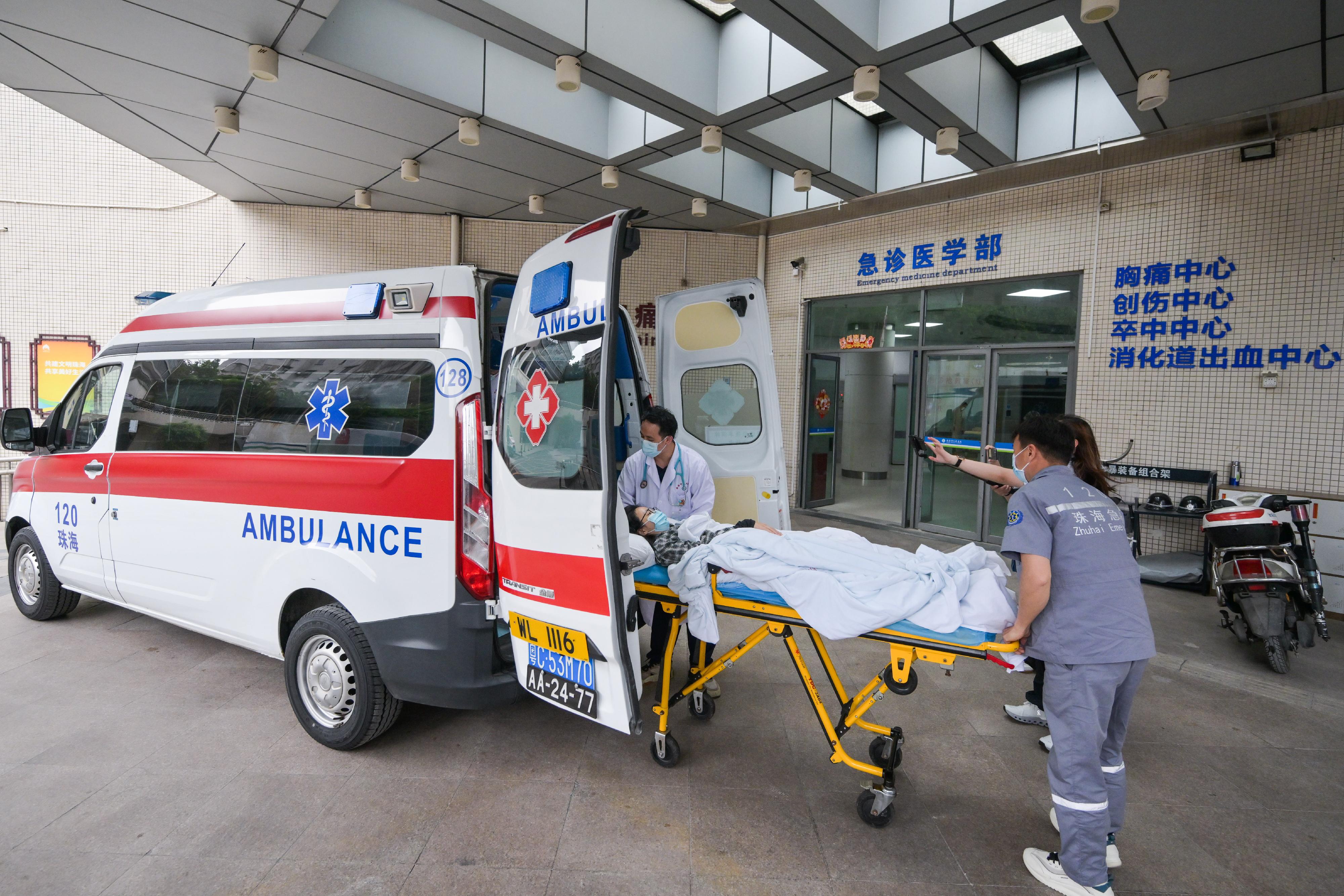
In a groundbreaking move to enhance regional healthcare cooperation, a pilot program for direct cross-boundary ambulance transfers between Guangdong Province and Hong Kong was officially launched on November 30th.The first phase of the program will begin with arranging direct cross-boundary ambulance transfers for patients from designated sending hospitals in Shenzhen, such as The University of Hong Kong – Shenzhen Hospital (HKU-SZH), to designated public hospitals in Hong Kong. Medical staff from Shenzhen and Hong Kong exchange patient information during a cross-border direct ambulance drill Oct. 31. Photos from Nanfang DailyUpon assessment and agreement by the teams of designated cross-boundary collaborating hospitals, arrangements can be made for patients with specific clinical needs and suitable clinical conditions to be transferred directly to Hong Kong hospitals without transferring patients between ambulances at boundary control points, thus minimizing any risks posed to patients during transfer. A notable aspect of this pilot program is the participation of mainland medical staff. These healthcare professionals, who will be aboard the ambulances, will apply for limited registration with Hong Kong’s Hospital Authority, thereby obtaining medical qualifications within Hong Kong.The trial program, set to last for one year, is an integral part of the Outline Development Plan for the Guangdong-Hong Kong-Macao Greater Bay Area (GBA). It represents the first practical application of cross-border ambulance services in the region.A cross-border direct ambulance departs Shenzhen and enters Hong Kong during a drill Oct. 31.Kenneth M.C. Cheung, hospital chief executive of HKU-SZH, expressed confidence in the hospital’s ability to provide enhanced medical care for residents in the Greater Bay Area. “We are committed to demonstrating medical integration in the GBA and offering more diverse experiences in healthcare,” said Cheung.To be fully prepared, the governments of Guangdong, Hong Kong, and Macao conducted three drills in August and October of this year, simulating the cross-boundary transfer of patients by ambulance. Guangdong and Hong Kong's health authorities plan to deepen their cooperation and explore expanding the scope of designated hospitals in mainland cities of the GBA, thereby promoting further medical integration in the region.Credit: Reporter Zhang Yu and Editors Cynthia, Yunfei , Shenzhen DailyEdited by HKU-SZH.